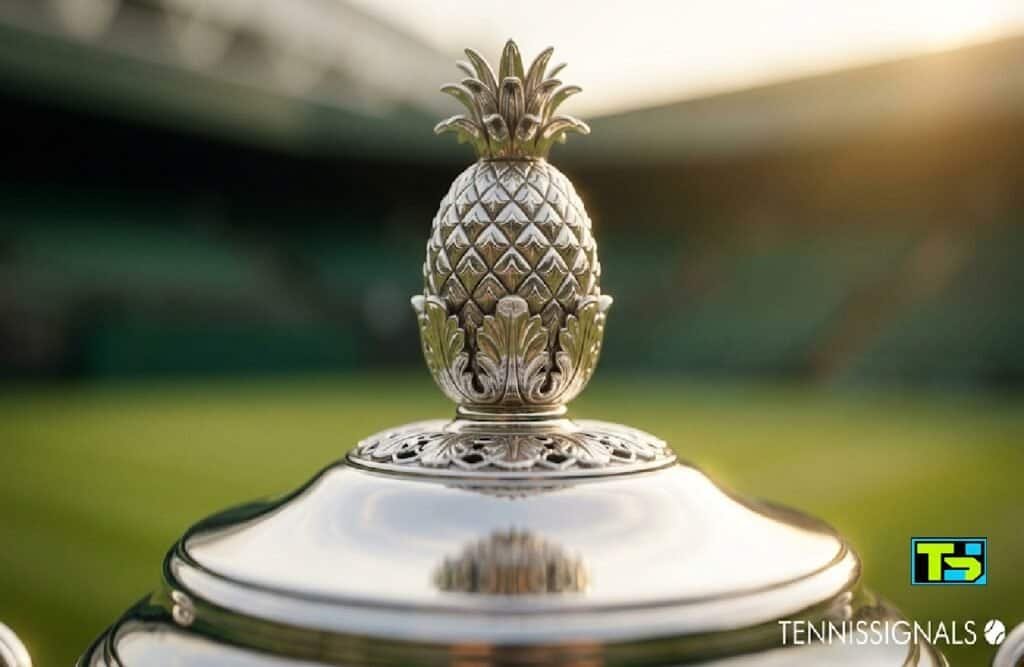
When the final match concludes after two weeks of exhausting battles, sweat, and occasional tears on the grass of Centre Court, the winner is handed something far more valuable than the prize money. Wimbledon trophies represent the absolute “Holy Grail” of tennis. Their design, history, and the details etched into the silver hide stories more fascinating than the matches themselves.
Whether it is the men’s cup or the women’s silver dish, these pieces of history are not just sports awards, but true works of art.
The Pineapple Mystery on Top of the Men’s Cup
The official name of the men’s trophy is The Gentlemen’s Singles Trophy (often referred to as the Challenge Cup). It was first awarded in 1887. It is made of premium silver gilt, but what has puzzled fans the most over the years is the top of the lid. Namely, standing proudly at the very top of the most prestigious tennis cup in the world is – a pineapple.
Why a tropical fruit at a traditional British tournament? Although the All England Club has never issued an official confirmation, historians agree on the most likely explanation. In the 17th and 18th centuries in England, the pineapple was an incredibly rare and expensive commodity, brought back from the distant voyages of the British Navy. Serving a pineapple to guests was considered the ultimate sign of wealth, hospitality, and the highest status. By placing a pineapple atop the cup, the designers wanted to convey that the champion receives the most precious thing the empire has to offer.
Another fascinating detail is the engraving on the cup. It reads: “All England Lawn Tennis Club Single Handed Championship of the World” – terminology that perfectly captures the spirit of the 19th century.
Venus Rosewater Dish: Mythology in Silver
The ladies’ singles champion receives a trophy of a completely different, yet equally impressive design. The Venus Rosewater Dish has been awarded since 1886.
This massive silver salver represents a masterpiece of Renaissance design, decorated with complex mythological motifs. The central boss depicts the figure of Sophrosyne, the Greek personification of temperance and self-control, holding a lamp and a jug in her hands. She is surrounded by four gods representing the classical elements, while the goddess Minerva and various astrological figures are engraved around the rim. It is not just a trophy; it is a message about balance, wisdom, and control—virtues necessary for every Wimbledon champion.
Do the Champions Take the Trophies Home?
Although we see overjoyed tennis players posing, hugging, and kissing these beautiful pieces of silver in front of photographers from all over the world, they actually never leave the grounds of the All England Club.
The golden rule of Wimbledon states that the original trophies belong exclusively to the club. A hundred years ago, the rule was different—if a player won the tournament three times in a row, they could keep the original cup (William Renshaw managed to do this, which is why the club had to commission the current cup in 1887).
Today, champions “only” take home a replica that is exactly three-quarters the size of the original, with their name flawlessly engraved. Although it is technically just a replica, in the world of sports, there is no more precious or prestigious piece of metal you can place in your display cabinet.
Looking for more stories from London, match schedules, and the latest tennis analysis? Return to our Wimbledon 2026 – The Ultimate Guide and stay up to date with every detail of the most prestigious Grand Slam!