Winning a title at the Paris Grand Slam represents the pinnacle of any tennis player’s career. When the coveted trophy is lifted after two weeks of relentless battle on the dusty clay, the champions do not just receive a million-euro check and a trophy to keep forever. They hold in their hands the history of French culture, art, and sporting heroism.
The Roland Garros trophies are among the most beautiful and recognizable in the sporting world. Each is a true masterpiece crafted from solid silver, and behind their names lie the incredible life stories of the people who shaped world tennis.
In this article, we reveal who the legends behind the names of these Parisian cups really are, as well as the secrets these prestigious trophies hide.
The Musketeers’ Cup (La Coupe des Mousquetaires) – A Symbol of Men’s Dominance
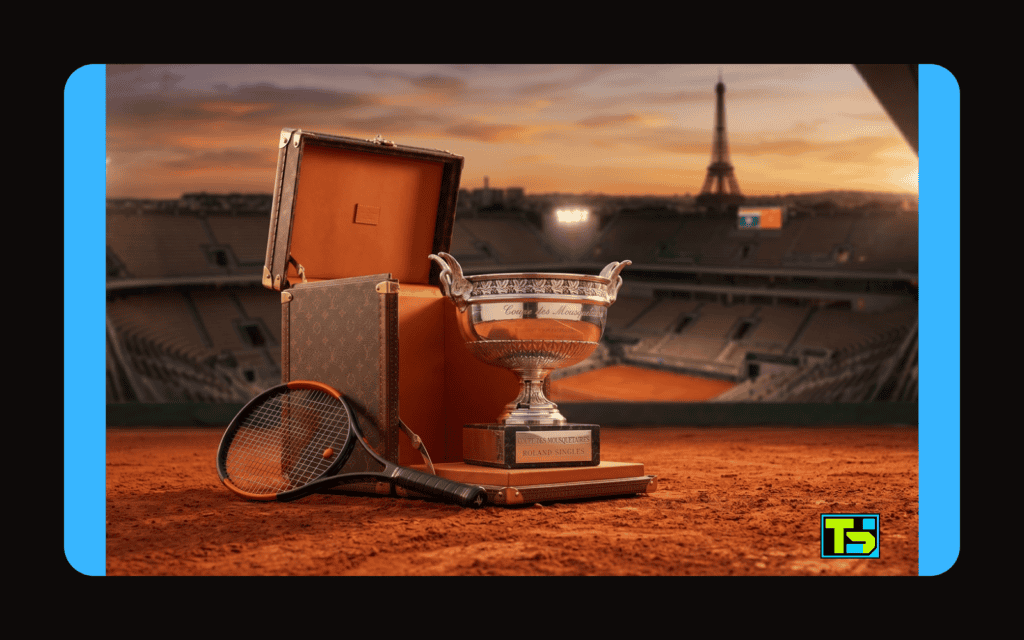
The winner of the men’s singles lifts the Musketeers’ Cup, a trophy weighing about 14 kg and standing 21 cm tall. This cup features the distinct shape of a Greek vase with two richly decorated handles shaped like swans, designed by the famous jewelry house Mellerio dits Meller from Paris, the oldest jewelry store in the world.
Who Were the “Musketeers”?
The name of the trophy is dedicated to the golden era of French tennis and four legendary players who dominated the world stage in the late 1920s and early 1930s:
- René Lacoste (the famous “Crocodile” and founder of the fashion brand)
- Jean Borotra (the “Bounding Basque”)
- Henri Cochet
- Jacques Brugnon
This great foursome consecutively won the Davis Cup for France from 1927 to 1932, triggering such a tennis fever in the country that the government decided to build the “Roland Garros” stadium to give them a place to defend their title. The Musketeers’ Cup is an eternal tribute to their shared heroism on the clay.
The Suzanne Lenglen Cup (La Coupe Suzanne-Lenglen) – Tribute to “The Divine”
The winner of the women’s singles receives the Suzanne Lenglen Cup, a visually elegant trophy that is a replica of the cup presented to the legendary player by the city of Nice in 1928.
Who Was Suzanne Lenglen?
Suzanne Lenglen was not just a successful tennis player – she was the first true global female sports star and a fashion icon who changed women’s tennis forever. The French media simply called her “The Divine” (La Divine).
She dominated world tennis between 1919 and 1926, winning an incredible 31 Grand Slam trophies (in singles, doubles, and mixed doubles). In addition to her unreal sporting success, Suzanne shocked the conservative society of the time by stepping onto the court in short sleeveless skirts, discarding stiff corsets, and sipping cognac during changeovers. She brought aesthetics, a dance-like stride, and unprecedented passion to the tennis court.
Other Parisian Trophies
Although the singles cups are the most famous, Roland Garros awards a total of five beautiful trophies:
- The Jacques Brugnon Cup (La Coupe Jacques-Brugnon): Awarded to the men’s doubles champions. Jacques Brugnon was the fourth member of the “Musketeers,” known as an elite doubles specialist.
- The Jean Borotra Cup (La Coupe Jean-Borotra): Awarded to the mixed doubles champions. Borotra was famous for his incredible energy and spectacular volleys at the net.
- The Marcel Bernard Cup (La Coupe Marcel-Bernard): Awarded to the women’s doubles champions, in honor of the French champion who won the Roland Garros singles and doubles titles in 1946, and later served as the long-time president of the French Tennis Federation.
Fun Fact: A Luxury Journey in “Louis Vuitton” Trunks
Since 2017, the Musketeers’ Cup and the Suzanne Lenglen Cup have arrived at the center court “Philippe-Chatrier” in the most glamorous way possible – in specially designed, unique trunks from the luxury French fashion house Louis Vuitton.
These trunks are handcrafted in the brand’s historic workshop in the Parisian suburbs. The exterior is covered with the signature LV monogram, while the interior is lined with orange leather that evokes the color of the Parisian clay. The front of the trunk features metal details forming the letter “V” (recalling the word Victoire – victory). This collaboration perfectly blends Parisian high fashion with ultimate sporting prestige.
Why Don’t Champions Take the Original Trophies Home?
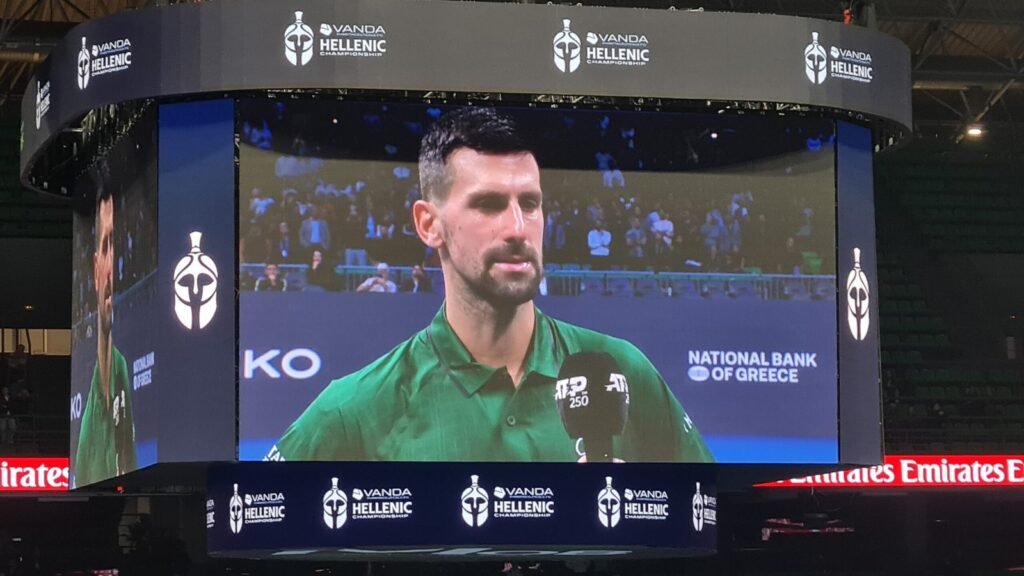
Although we see Novak Djokovic or one of the female champions proudly holding the original trophies during the award ceremony, they do not actually take them home.
The original cups are too precious and never permanently leave the premises of the French Tennis Federation. They are kept under tight security and are only brought out into the light of day for the finals.
Instead, players receive perfect replicas for their permanent ownership, which are slightly smaller than the originals (usually made at 3/4 scale), while the champions’ names remain forever engraved on the base of the original Musketeers’ Cup in Paris.
Who will have the honor of lifting these silver beauties this year and writing their name alongside the greatest legends in sports history? Follow all the matches and the latest news with us on our Roland Garos 2026 Ultimate Guide