
The Australian Open women’s final between Elena Rybakina and Aryna Sabalenka delivered exactly what elite Grand Slam tennis so often promises: momentum swings, pressure moments, and a battle decided by composure rather than raw numbers.
First set: Rybakina strikes early and holds firm
Rybakina made an immediate statement by breaking Sabalenka’s serve early in the opening set and successfully protecting that advantage until the end, closing the set 6–4.
Statistically, Sabalenka actually held the edge in several areas. She produced more winners (13 to 9) and committed fewer unforced errors, but efficiency on break points told a different story. Sabalenka failed to convert either of her two break chances, while Rybakina capitalized on one of her two, which ultimately proved decisive.
The closest Sabalenka came to swinging the set was in the eighth game, when she earned two break points on Rybakina’s serve. Under pressure, Rybakina stayed composed and escaped the game, maintaining control through the finish.
Second set: Sabalenka’s patience pays off
The second set began with renewed intensity from Sabalenka. After holding her opening service game, she immediately pressured Rybakina’s serve and created three early break points, but once again failed to convert.
Following those early opportunities, the match settled into a rhythm of steady service games, with break chances becoming scarce. That pattern held until 5–4 for Sabalenka, when Rybakina served to stay in the set.
This time, Sabalenka broke through, taking the set and leveling the match. Once again, the margins were razor-thin: Rybakina finished the set with one more winner, but failed to convert any of her five break points, while Sabalenka converted one of her five — the only one that truly mattered.
Third set: Rybakina flips the script
Sabalenka carried her momentum into the deciding set, holding serve and immediately attacking Rybakina’s next service game. This time, she converted her first break opportunity, confirmed the break, and raced to a 3–0 lead.
At that stage, the final appeared to be tilting decisively in Sabalenka’s favor. Instead, Rybakina raised her level, playing with greater precision and controlled aggression.
The Kazakhstani star won five consecutive games, breaking Sabalenka twice and turning a 0–3 deficit into a 5–3 lead. Sabalenka managed to hold serve once more to close the gap to 5–4, but Rybakina calmly served out the match, sealing the victory without drama.
Match verdict
This final was defined by execution in key moments rather than overall statistics. Sabalenka matched Rybakina shot-for-shot across large portions of the match, but Rybakina proved more efficient when opportunities arose.
By combining patience under pressure with timely aggression, Elena Rybakina captured the Australian Open title, reinforcing her reputation as one of the most mentally resilient players on the WTA Tour.
👉 For immediate post-match reactions from both players, read the full on-court interviews.
👉 For full context ahead of the final and what was at stake, read our Australian Open 2026: Day 14 Preview.
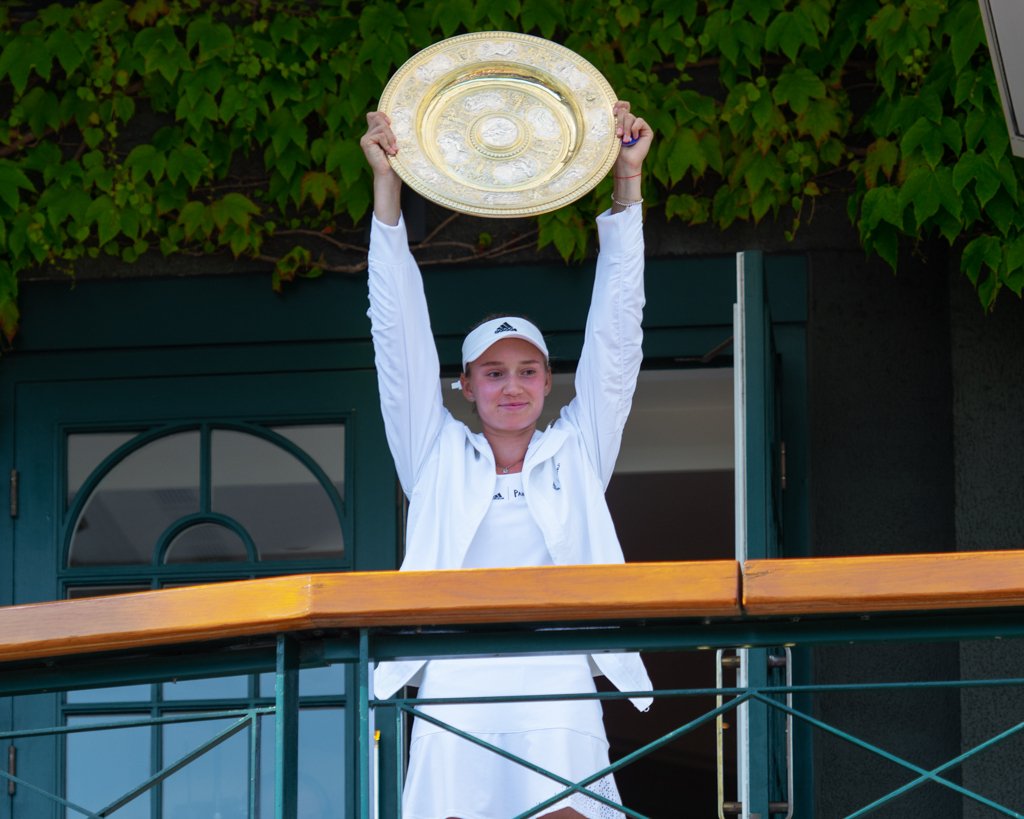
By Peter Menzel – https://www.flickr.com/photos/133535073@N08/52206917725/, CC BY-SA 2.0, https://commons.wikimedia.org/w/index.php?curid=120303988
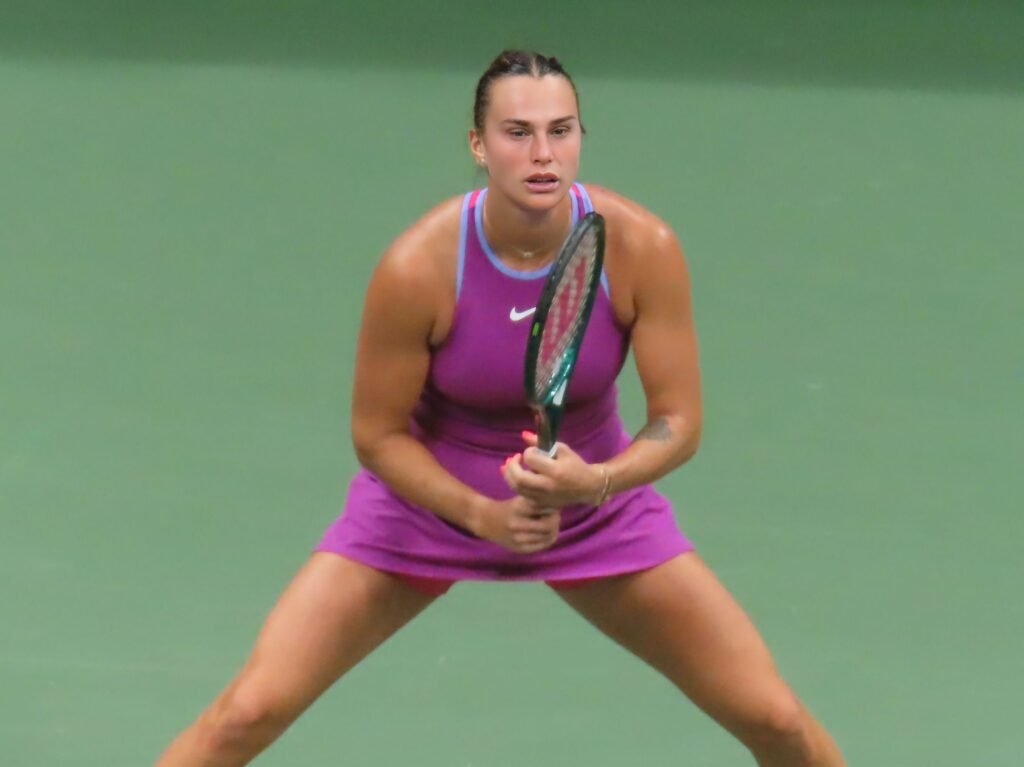
By Ocoudis – Own work, CC0, https://commons.wikimedia.org/w/index.php?curid=153642741