
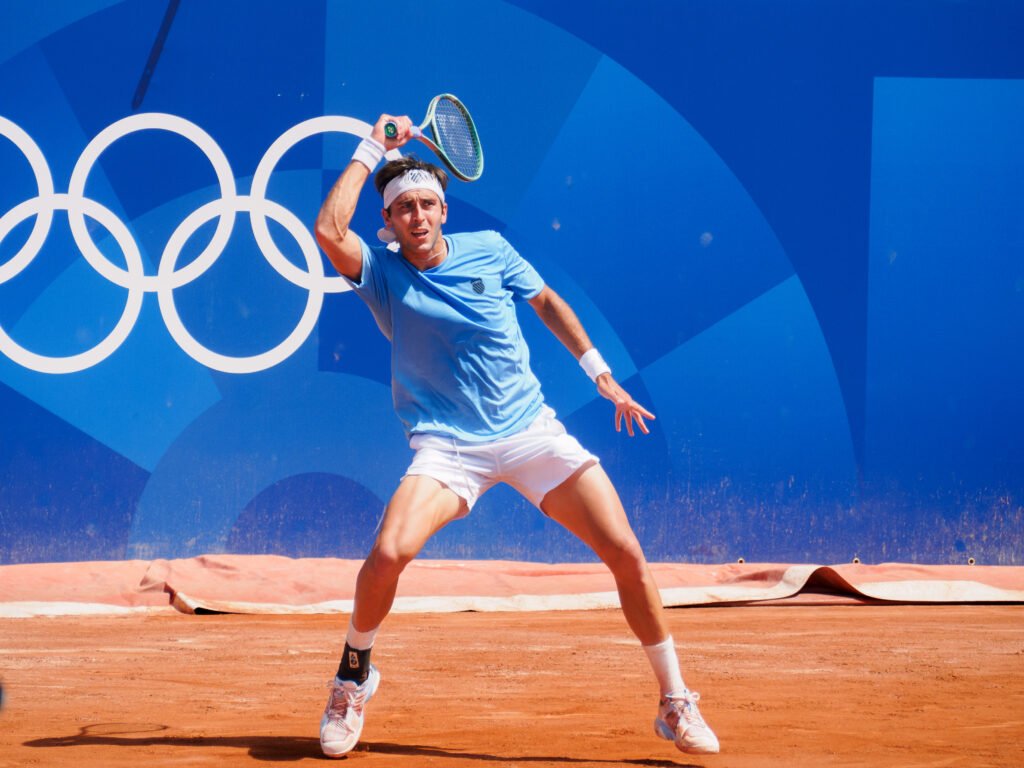
Tomás Martín Etcheverry captured his first ATP Tour title in the most grueling fashion imaginable, defeating Alejandro Tabilo 3-6, 7-6(3), 6-4 in the Rio Open final on Sunday after playing nearly seven hours of tennis in a single day. The 26-year-old Argentine completed an extraordinary marathon semifinal against Vít Kopriva earlier in the day before staging a dramatic comeback to claim the biggest trophy of his career at the prestigious ATP 500 event.
The victory marks a watershed moment for the world No. 51, who had previously fallen short in all three of his ATP finals. After 6 hours and 49 minutes of court time on Sunday alone — including 3 hours and 43 minutes to finish his rain-delayed semifinal and 3 hours and 6 minutes in the final — Etcheverry collapsed to the red clay in tears when Tabilo’s final shot sailed long.
Marathon Morning: Surviving Kopriva
Etcheverry’s Sunday began under the blazing Rio sun, resuming his semifinal against Czech qualifier Kopriva with the match locked at one set apiece and nine games completed. Heavy Saturday rains had forced the postponement, creating the brutal scenario that would define Etcheverry’s triumph.
The Argentine ultimately prevailed 4-6, 7-6(2), 7-6(4) in what became the longest match in Rio Open history at 3 hours and 57 minutes. The physical toll was immense — the match was suspended during the second set due to extreme heat and humidity protocols, adding to the already challenging conditions.
Etcheverry saved multiple break points in the deciding set and showed remarkable mental fortitude to capture two consecutive tiebreaks, the second coming after Kopriva had held match point opportunities. The victory sent the eighth seed through to his fourth career ATP final, but gave him only a few hours to recover before facing the fresher Tabilo.
First Set Collapse and Early Second-Set Crisis
Despite the exhausting morning, Etcheverry started the final aggressively, breaking Tabilo in the opening game. But the 28-year-old Chilean responded immediately, reeling off four consecutive games to seize control. Tabilo’s left-handed forehand proved devastating, and he maintained his advantage to claim the first set 6-3.
The statistics painted a concerning picture for the fatigued Argentine. While Tabilo won 67 percent of points on his first serve and 56 percent on his second, Etcheverry managed only 50 percent and 40 percent respectively. His primary weapon — the serve that had carried him through earlier rounds — was misfiring at the worst possible time.
The second set began ominously. Etcheverry committed a series of unforced errors, including two wayward forehands and a costly double fault, surrendering his serve in the third game. At 3-1 down and having committed twice as many unforced errors as his opponent, the dream of a first title appeared to be slipping away.
The Turning Point: Finding His Shots
What followed was a testament to Etcheverry’s character and conditioning. The La Plata native began finding his range from the baseline, gradually reducing his error count and applying pressure to Tabilo’s serve. In the 12th game, serving to stay in the match, Tabilo saved a set point to force a tiebreak.
It was Etcheverry’s third tiebreak of the day, and unlike the physical tests against Kopriva, this one became a showcase of his improved shot-making. The Argentine dominated the breaker 7-3, unleashing the powerful groundstrokes that had been absent in the opening stages. The momentum had shifted decisively.
Decisive Third Set: Second Wind Carries to Victory
The final set revealed either remarkable physical resilience or pure adrenaline overcoming exhaustion. Etcheverry secured the crucial break in the third game, his baseline depth forcing errors from an increasingly frustrated Tabilo. The Chilean, who had looked so comfortable in the opening set, now faced an opponent playing with the freedom of a man with nothing to lose.
Tabilo fought valiantly to create break-back opportunities, but Etcheverry’s service games grew stronger as the finish line approached. The Argentine saved multiple break points in the crucial late games, each time responding with big first serves or aggressive forehands that pushed Tabilo behind the baseline.
At 5-4, serving for the championship, Etcheverry showed nerves of steel. After three hours of battle in the final alone — and nearly seven hours total on the day — he fired an ace to reach championship point. Moments later, Tabilo’s forehand caught the net tape and drifted long, sealing Etcheverry’s 3-6, 7-6(3), 6-4 victory.
By the Numbers
Match Statistics:
- Duration: 3 hours, 6 minutes
- Total court time Sunday: 6 hours, 49 minutes
- Winners: Etcheverry 35, Tabilo 28
- Unforced errors: Etcheverry 41, Tabilo 35
- Break points converted: Etcheverry 3/10, Tabilo 2/8
- Aces: Etcheverry 8, Tabilo 3
Tournament Path to Title:
- Etcheverry: Comesaña, Gaubas, Faria, Kopriva, Tabilo (dropped 2 sets)
- Tabilo: Nava, Passaro, Tirante, Buse, Etcheverry (dropped 2 sets)
Career Finals Records:
- Etcheverry: 1-3 (first ATP title, 0-3 previously)
- Tabilo: 3-3 (seeking first ATP 500 title)
Head-to-Head History
The victory improved Etcheverry’s head-to-head record against Tabilo to 2-1, with both previous meetings coming earlier in 2026. Most recently, Etcheverry defeated the Chilean in the Buenos Aires quarterfinals just days before their Rio encounter.
That Buenos Aires match proved prophetic — Tabilo started strongly before Etcheverry raised his level to prevail. The pattern repeated in Rio, with the Argentine showing superior stamina and shot-making when it mattered most.
“I know he’s dealt with injuries and setbacks,” Tabilo said afterward, acknowledging Etcheverry’s long road to a first title. “He deserved this moment. The way he fought today, playing two matches, it’s incredible.”
Emotional Breakthrough After Long Wait
For Etcheverry, the victory represented the culmination of years of near-misses and heartbreak in finals. His three previous ATP championship matches had all ended in defeat, including losses at ATP 250 level that had created doubt about his ability to close out big matches.
“Es un sueño hecho realidad,” (It’s a dream come true) Etcheverry said through tears in his on-court interview. “I’ve been searching for my first title for so long. I’ve been working very hard with my team. I still can’t believe it. This is the happiest day of my life. I gave 100 percent. It was the final, the most important match.”
The Argentine took to social media afterward to express his joy: “El día más feliz de mi vida. Soy Campeón ATP. Gracias a todas las personas que me ayudaron a conseguir uno de mis mayores sueños.” (The happiest day of my life. I am an ATP Champion. Thank you to everyone who helped me achieve one of my greatest dreams.)
Tabilo’s Missed Opportunity
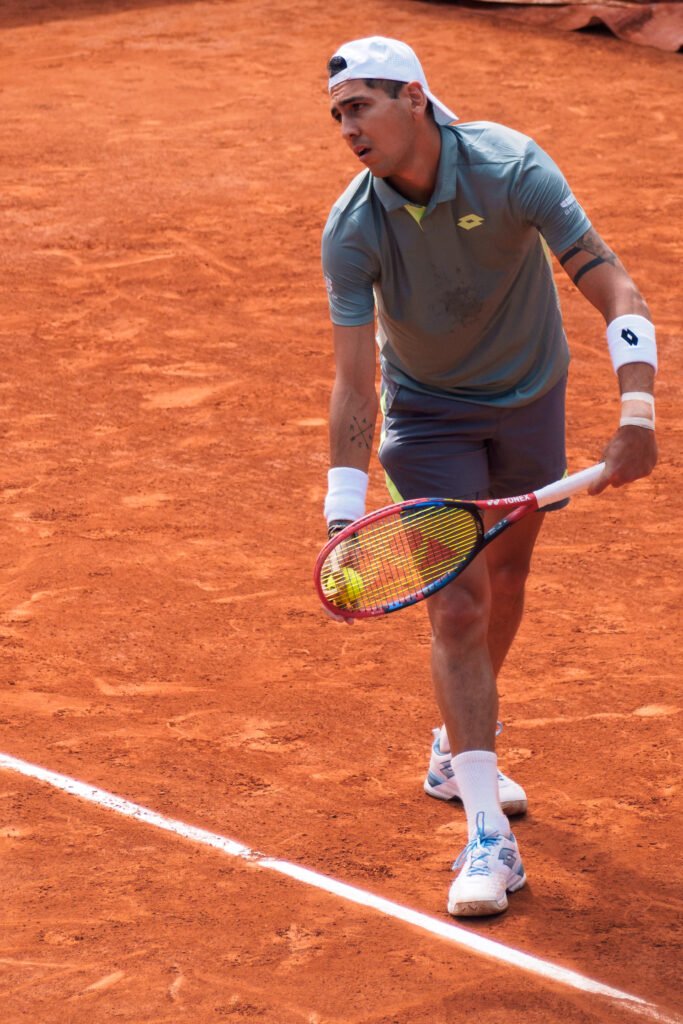
For Tabilo, the defeat marked his sixth ATP final and fourth loss in championship matches. The Chilean had been seeking his first title on clay and his first ATP 500 trophy, having previously claimed three ATP 250 crowns on hard court and grass.
Despite the disappointment, Tabilo’s week in Rio achieved important objectives. His run to the final, which included dominant wins over qualifier Thiago Tirante and surprise semifinalist Ignacio Buse, returned him to the top 50 in the rankings for the first time in nine months.
The Chilean’s ranking will rise to approximately No. 42, putting him close to regaining seeded status for Grand Slam tournaments. Tabilo, who missed significant time in 2025 with an abdominal tear that sidelined him for the entire grass-court season, showed in Rio that he has recovered his form and competitiveness.
Had Tabilo won, he would have become the first Chilean man in the Open Era to win ATP titles on all three surfaces — hard court (Auckland, Chengdu), grass (Mallorca), and clay. That historic achievement will have to wait for another day.
Physical Feat for the Ages
Etcheverry’s Sunday workload ranks among the most grueling title runs in ATP history. Playing nearly seven hours in a single day at an ATP 500 event — especially on the physically demanding clay surface in Rio’s heat and humidity — showcased extraordinary conditioning and mental toughness.
The heat protocols that stopped his semifinal during the second set added another layer of difficulty, forcing him to restart after cooling down. Tennis physiology experts note that recovering from such a match in just a few hours, then producing a championship-level performance, requires elite physical preparation.
“I don’t know where the energy came from,” Etcheverry admitted. “My team told me to just go out and fight, point by point. I couldn’t think about being tired. It was the final — you find strength you didn’t know you had.”
Rankings Implications
The 500 ranking points catapult Etcheverry back into the top 50, with projections placing him around No. 33 when the new rankings are released. The jump brings him close to his career-high ranking of No. 27, achieved in February 2024.
For the Argentine, breaking into the top 30 would secure seeding at upcoming Masters 1000 events and potentially at Roland Garros, where clay-court specialists receive favorable draws. His Rio triumph also solidifies his status as a key figure on South America’s clay-court swing.
The ATP 500 title is the most significant of Etcheverry’s career, representing his breakthrough onto the sport’s bigger stages. Prior to Rio, his best result had been reaching ATP 250 finals, leaving questions about whether he could handle the pressure at higher-level events.
South American Clay-Court Excellence
The all-South American final continued the region’s strong showing on its signature surface. Both Etcheverry and Tabilo navigated through a competitive draw that featured multiple clay-court specialists and surprise performers like Peru’s Buse, who reached the semifinals as a qualifier.
The tournament lost its top two seeds early — Francisco Cerúndolo withdrew injured, and second seed Casper Ruud fell in the quarterfinals — opening the draw for first-time champions. Rio’s guarantee of a new winner became reality in spectacular fashion through Etcheverry’s resilience.
Brazil’s passionate tennis fans witnessed one of the most memorable finals in tournament history, with the match featuring multiple momentum shifts, breathtaking shotmaking, and the drama of Etcheverry’s exhaustion adding a compelling human element to the sporting contest.
Looking Ahead: Building on Breakthrough
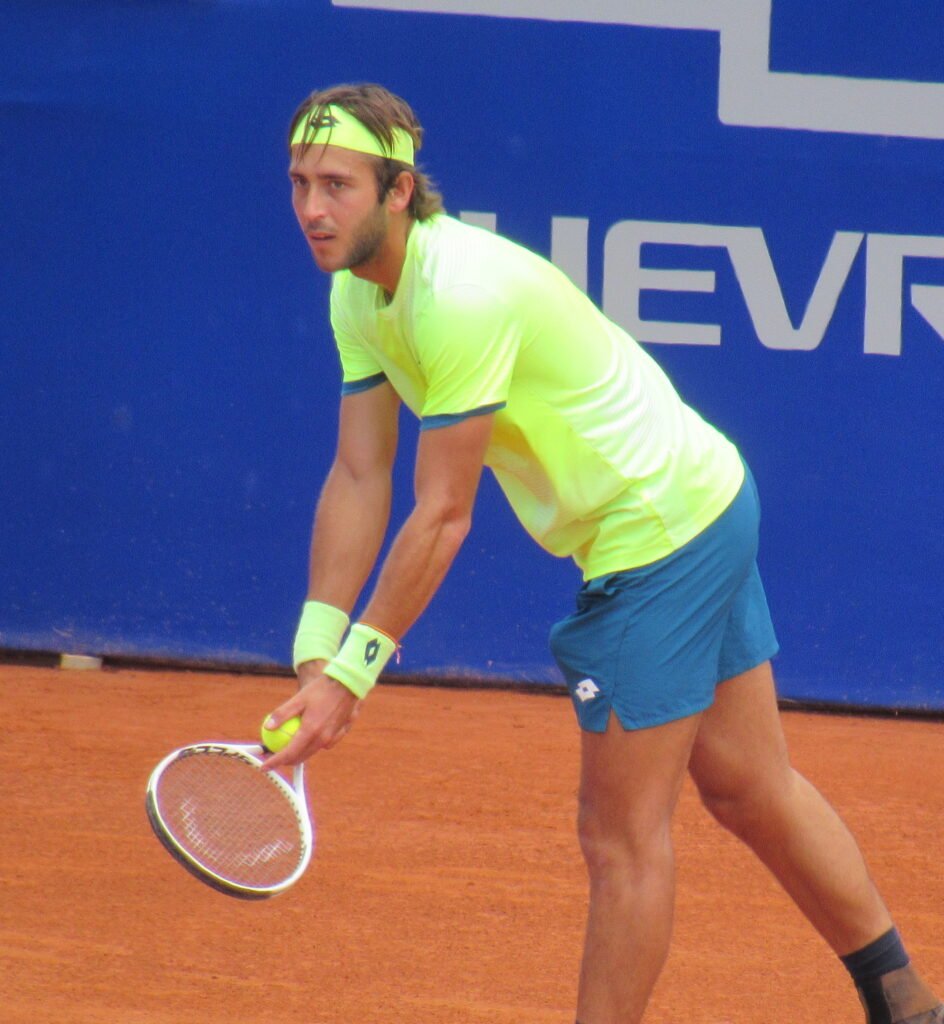
For Etcheverry, the Rio title removes the “0-3 in finals” burden that had followed him. More importantly, it provides confidence that he can compete and win at the ATP 500 level, traditionally a stepping stone toward Masters 1000 success and potential Grand Slam deep runs.
The South American clay-court swing continues with tournaments in Buenos Aires and Santiago, where Etcheverry will look to build on his newfound momentum. His game — built on a powerful serve and heavy groundstrokes — suits the slower surface, making him a threat at upcoming clay-court events.
Tabilo, meanwhile, can take consolation in his return to form after injury struggles. His movement to No. 42 in the rankings and his dominant performances through the semifinals suggest he remains a serious contender for titles as the clay-court season progresses toward Roland Garros.
The Rio Open final will be remembered as much for Etcheverry’s physical achievement as his tennis excellence — a player who refused to let exhaustion deny him his destiny, grinding through pain and fatigue to claim the title that had eluded him for so long.
Related Coverage
Tournament Progression:
- Rio Open Semifinals: Tabilo and Etcheverry Set Final After Contrasting Matches
- Rio Open QFs Complete: Tabilo and Buse Set Up Historic Pacific Semi-Final
- Rio Open Round of 16 Complete: Quarter-Final Line-Up and Start Times
Tournament Overview:
Related Predictions:
🎯 Medvedev vs Wawrinka – Dubai R16
Former world No.1 faces Grand Slam champion in Dubai. Our expert prediction with H2H analysis, stats breakdown, and tactical insights.
Read Prediction →